Sunday, February 22, 2009
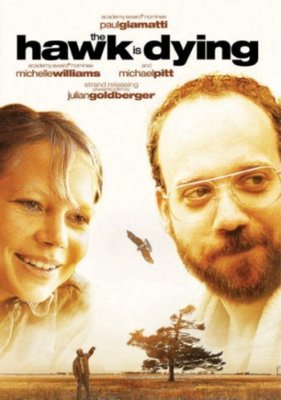
The Hawk Is Dying. Feature film. (2006, 106 mins) IMDB
W
hen I saw Paul Giamatti starred in this film, I had to watch it, which meant I wanted to like it, but couldn't. I've been trying to figure out why and don't have any concrete reasons.
Was the narrative arc too weak? Maybe.
Whatever it is, something was missing or wrong.
I know I didn't like the handheld camera shooting--the sort where the camera shakes in all sorts of directions, even when a character isn't moving. I don't like that style and wish directors would stop using it. But that's not the reason I didn't enjoy the movie.
For whatever reason I didn't get into to it.
It's possible that our main character played by Giamatti isn't developed enough. We don't get to know enough about him. We learn more about training hawks than we do the character. I didn't mind the heavy-handed exposition on training and caring for hawks, although it could have been done differently. Very few know much about falconry so it had to be explained.
The film is about Giamatti character who is obsessed with training a wild hawk.
We first meet him at an auto mechanic type shop where he deals in the front office with customers. Later we learn he owns the shop. He's not married, no children and is generally pissed off at life. The entire setup for the film is weak as to who is who and what they are doing. It isn't entirely clear.
Middle-aged men who are pissed off at life, the world, their careers, their family seems to be a common angle in films these day. Willy Loman lives.
Yes, the setup of this film doesn't work. After the start of the film, we learn he previously had a hawk who died. He died because he wouldn't eat. Apparently hawks who don't want to be kept, would rather starve to death and do. But perhaps our hero didn't know what he was doing and killed the hawk. I'm not sure.
The biggest problem, however, is the fact we never learn why he is so obsessed with this hawk. Nothing stops him from being with the hawk--not even the death of his nephew. The film seems to be more about hawks and falconry with a weak narrative thrown over it to make it seem like a movie.
By the end of the movie, he has the hawk eating. He has triumphed, but it's such a weak triumph. He's done something predictable and not terribly challenging. And what did he gain in the process? Pride? Self-satisfaction? The chance to tell everybody who doubted him: See, I told you. What can we take from that?
As for the hawk, we see him with our hero being cranky--flying at him, clawing and pecking. This happens over and over and over and we don't need to see it that many times. The arc of the relationship between the two should have been longer. The feeding coming earlier, other successes.
Finally, our hero isn't very likeable. He yells and screams at his sister. He's anti-social. Selfish. We just don't care if he succeeds or not and that's important.
Posted 2009/02/22 at 18h35ET in Movie Commentary.
Comments
Post a Comment